On August 26, Meta rolled out a set of AI features built specifically for small businesses. They connect to your Instagram and Facebook accounts, your Meta ad campaigns, and — notably — your Google Workspace files. The pitch: hand Meta AI your business information, let it pull context from the web, and get back decks, documents, spreadsheets, and other everyday work products, generated from inside the same dashboard where you already manage your social presence and ad spend.
If your first reaction is "another AI writing assistant, great," you're only looking at half the announcement. The interesting part isn't the writing. It's the wiring. Meta just connected three systems — your social accounts, your ad campaigns, and your Workspace documents — that most small teams currently bridge by hand, usually badly, usually at 10 p.m. the night before a launch.
What Meta Actually Shipped
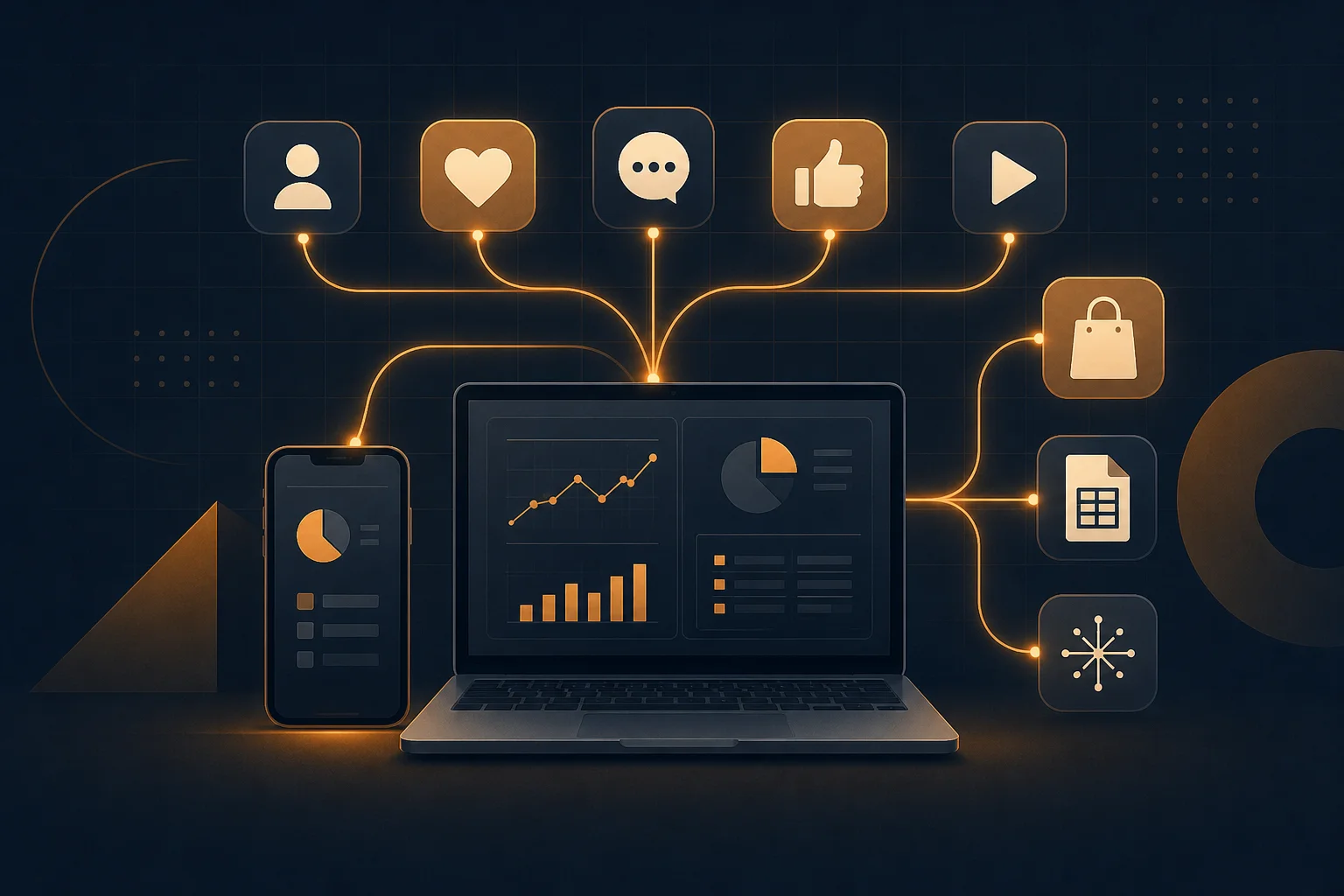
Three connections define the release. Your social accounts, your ad campaigns, and your Google Workspace files can all now feed the same assistant, inside the tools you already log into every day. Ask it to draft a campaign brief pulling from a recent Instagram post's performance, summarize what's working across your last ten ad sets, or turn a rough outline into a client-ready deck — and it works across those systems instead of requiring you to export data from one and paste it into another.
That combination matters because most small teams lose real hours in exactly that gap. Campaign performance lives in Meta's ads dashboard. Customer research lives in a Google Doc. The person who needs both, usually the founder or the one marketing hire, is the one stitching them together manually, usually under deadline pressure. Meta is betting that owning that connective tissue is more valuable to a small business than owning the single best writing or design feature — and for a lot of teams, that's probably the right bet.
Why the Connections Matter More Than the Chatbot
We've written before about how AI is reshaping marketing workflows — content generation, performance analytics, and campaign optimization increasingly living in one connected system instead of five disconnected tabs. Meta's release is a direct extension of that shift, and it lands at the exact moment paid advertising itself is being rebuilt around AI-driven creative and targeting.
The practical upshot for a small business: the tool doing your social scheduling, the tool running your ad spend, and the tool holding your planning documents are converging into one assistant that can see across all three. That's a genuine time-saver if you use it deliberately. It's also a reason to think, even briefly, about what "connect your Google Workspace" actually grants an outside platform access to — the same governance question we've raised about auditing AI agent permissions applies here just as much as it does to a CRM or help desk plugin.
Not sure which AI features are actually worth turning on?
We help small businesses cut through the launch-post noise, pick the one or two AI tools that solve a real bottleneck, and set up the guardrails so nothing customer-facing goes out unreviewed.
Book a Free Strategy Call →The Wider Small-Business AI Wave This Week
Meta wasn't operating in isolation. The same week, several other vendors shipped AI features aimed squarely at small merchants and marketers, and they cluster into a pattern worth noticing: almost none of them are chasing a better chatbot. Attentive launched AI Grow, which reads real-time browsing and shopping behavior to time email and SMS sign-up prompts, then measures the lift through incremental A/B testing rather than asking you to take its word for it. Sell The Trend shipped an AI Ads Blueprint that walks a seller from product idea through ad format, creative, copy, and resizing in a single workflow. Designkit released a tool that converts static product photos into ready-to-use marketing video for TikTok, Instagram, and storefronts.
Notice what's missing from that list: nobody launched a better strategy engine. Every one of these tools targets a production bottleneck — not enough creative, not enough list growth, not enough campaign output — rather than a thinking bottleneck. That's a reasonable read on where small businesses actually get stuck. Most founders and marketers already know roughly what they want to say. They just can't make enough of it fast enough, which is the same pressure that's been pushing AI-powered content creation from novelty into a standard part of the small-business toolkit.
Where This Pays Off Fastest
Three places are worth your attention first, in roughly this order of speed to payoff:
- Creative volume. If your ad account has been running the same three creative assets since spring, more variations — not a smarter targeting theory — is usually the fastest lift available. Ad fatigue shows up in your cost-per-result before it shows up anywhere else.
- List and audience capture. Timing a sign-up prompt or DM follow-up to actual behavior beats showing everyone the same popup two seconds after they land. The revenue difference tends to show up within a single sales cycle, not a quarter.
- Back-office production. Decks, campaign briefs, and reporting spreadsheets eat founder hours that generate zero revenue. That's the same argument that's made AI stick in categories founders otherwise resist, from bookkeeping to internal reporting.
If you're integrating Meta's tools with your existing Google Workspace files, this is also a good moment to revisit how you're already using Gemini inside Google Workspace — you may now have two AI assistants with visibility into the same documents, and it's worth deciding which one owns which job before they start stepping on each other.
The Catch Nobody Puts in the Launch Post
Generated creative still needs a human check before it goes out. Claims about your product, your pricing, and your results are your legal responsibility regardless of which system wrote the sentence — the FTC's advertising guidance applies exactly the same way to an AI-drafted ad as it does to a copywriter's. None of these launch announcements mention that, because it isn't a feature. It's your job.
There's a brand cost too, and it's subtler. When every small business in your category is generating creative from similar prompts against similar models, output starts to converge. The specific thing that made your ads or your posts recognizable can quietly disappear if you let the tool run unsupervised for too long. Use these features for volume. Keep a human on voice, tone, and final review — especially anything that reaches a customer directly.
What To Do This Week
You don't need to adopt every feature Meta shipped, and you shouldn't. Pick one bottleneck and move on it deliberately:
- Identify your actual bottleneck. Is it creative volume, list growth, or back-office time? Pick the one where you're visibly short on output, not the one that sounds most impressive in a demo.
- Connect only what that bottleneck requires. You don't need to link Google Workspace on day one if the problem you're solving is ad creative. Grant access incrementally.
- Set your measurement before you flip the switch. Decide the metric, the comparison window, and the number that would make you turn it back off. A free trial with no baseline teaches you nothing.
- Keep a manual review step for anything customer-facing. Ads, DMs, and public posts get a human look before publishing, full stop.
- Revisit in 30 days. Vendors expand what these tools can do faster than most small teams revisit what they've already turned on.
Meta's small-business AI push is a genuine convenience, and the underlying bet — that connecting your existing tools beats adding one more standalone app — is probably correct. But convenience and oversight aren't opposites. The businesses that get real value out of this wave will be the ones that picked one bottleneck, measured it honestly, and kept a human in the loop on anything that touches a customer. Everyone else will just have more AI-generated noise across more platforms.